
Meets every 2nd Saturday at Freemasons Hall,Masonic Valley,Near Diya Infosystems,Bolpugudde,Kavoor,Mangalore
Warrant under GLI
23 March 1998
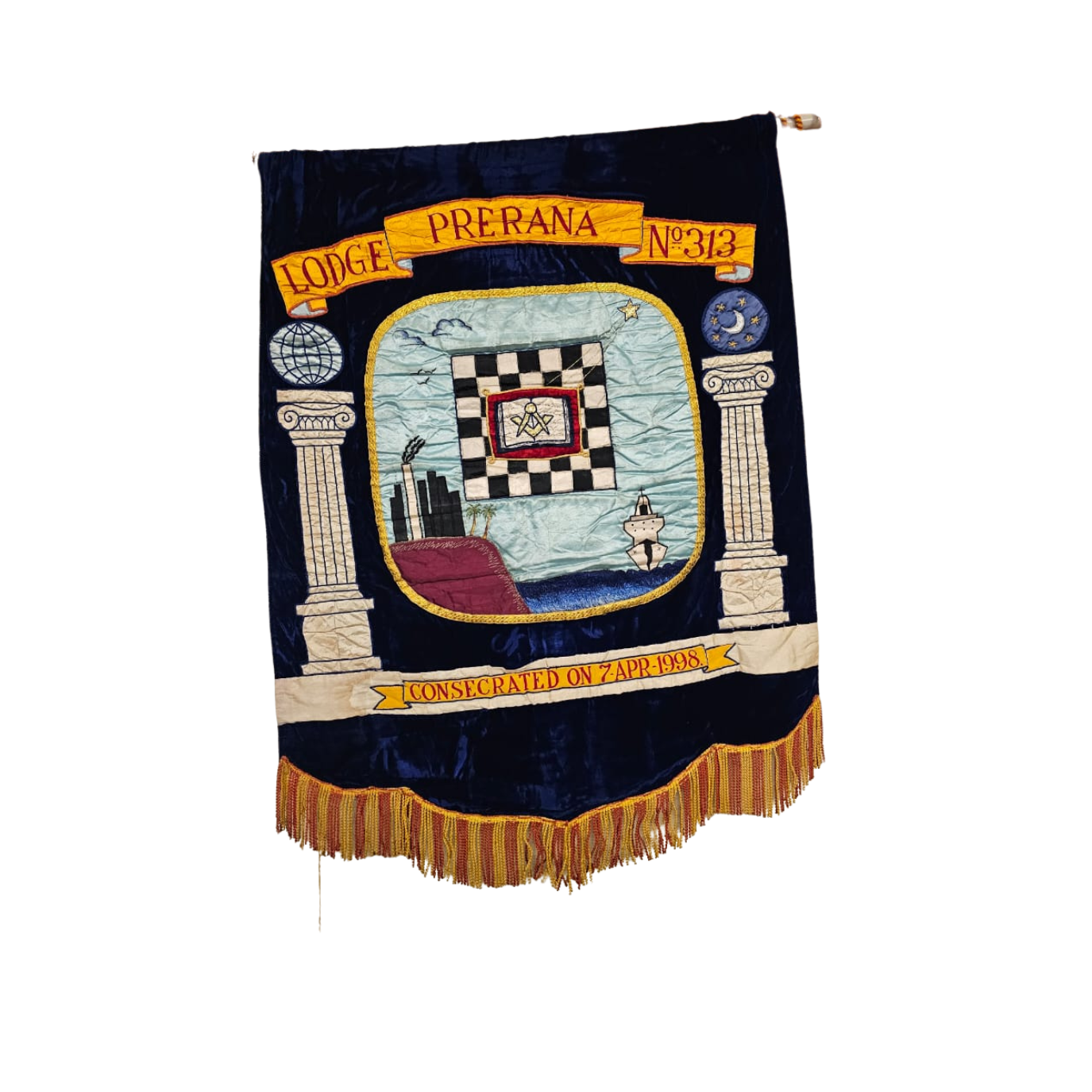
Meets every 2nd Saturday at Freemasons Hall,Masonic Valley,Near Diya Infosystems,Bolpugudde,Kavoor,Mangalore
Warrant under GLI
23 March 1998
The Grand Lodge of India (GLI) is the main governing body of Freemasonry within India, it
was officially constituted on Friday 24 November 1961. [1] There were three delegations from the
Grand Lodge of Scotland, Grand Lodge of Ireland and Grand Lodge of England in that order.
Out of a total of 277 individual Lodges in India already existing at the time, 145 opted for the
new Grand Lodge of India. When the Grand Lodge of India was formed, Freemasonry was being
widely followed throughout Europe and the English Colonies following the establishment of the
Grand Lodges of England, Scotland and Ireland. The nobility, clergy, military personnel and
men of influence sought to become part of the Fraternity. British India was no exception. In fact,
within just 12 years of the constitution of the Grand Lodge of England, constituted for the
purpose of exercising supervision over the Lodges in London and its neighbouring areas, a
petition was sent by a few Brethren in India to constitute a Provincial Grand Lodge in due form
at Fort William, Calcutta. The petition having been granted, a Provincial Grand Master was
appointed to supervise Masonic activity in India and the Far East in 1729. In India, British
influence gradually spread through its East India Company, and Lodges were established by the
military, railways and bureaucracy, though the military played a more prominent role. At the
close of the French and Indian Peninsula wars there were, in addition to Military Static and
Travelling Lodges, more than 100 Lodges warranted by the three Grand Lodges. Military Lodges
greatly accelerated the growth of Colonial Freemasonry. It is no wonder that so many prominent
military leaders of the French Revolutionary and Indian wars were Freemasons, such as Lord
Nelson, Sir Charles Napier, Lieutenant General Sir Eyre Coote, twice Commander-in-Chief of
British India, Lord Lake, Hastings, Dalhousie, the Duke of Wellington, Sir William Lockhart and
Lord Kitchener of Khartoum, both Commanders-in-Chief of British India, and so on. Historical
records indicate that the son of Hyder Ali, Tipu Sultan, was also himself a member of the
fraternity. Many Lodges had been set up in other major townships like Madras, Calcutta and
Mumbai. By the next 150 years, some 400 registered Lodges were existing in India, but the
figure diminished soon after India gained its Independence in 1947, when its strength came down
to just about 290. Amongst its prominent members Swami Vivekananda (initiated in 1884 under
the name of Brother Narendra Nath Dutt, in Lodge ‘Anchor & Hope’, Calcutta); Motilal Nehru
(father of Pandit Jawaharlal Nehru and grandfather of Indira Gandhi) – Lodge ‘Harmony’,
Kanpur; C.Rajagopalachary (Governor General of India); Sir CP Ramaswamy Iyer (Divan of
Travancore); Dr. P.V.Cheriy (Governor of Maharashtra); Maharaja of Patiala and Fakhruddin Ali
Ahmed (President of India), Actor Ashok Kumar, Madhav Rao Scindhia, M.A.Khan Pataudi.
The Grand Lodge of India was officially constituted on Friday, the 24 th of November 1961 at
Asoka Hotel, New Delhi. There were three delegations from the Grand Lodge of Scotland,
Ireland and England. In addition to the Grand Master, Masons of Grand Lodge of Scotland,
representatives of Grand Masters of England and Ireland, The Grand Master of the Grand Lodge
of the State of Israel, the Most Worshipful Past Grand Master of the Grand Lodge of Alberta
(Canada) and about 1500 Brethren from all over India and abroad were present at this historic
event. After the consecration and Constitution of the Grand Lodge of India, the Deputy Grand
Master of England assumed the Throne and installed Major General Dr.Sir Syed Raza Ali Khan,
His Highness the Nawab of Rampur, as the first Grand Master of the Grand Lodge of India. The
Apron, chain in Gold and Gauntlets etc. For the new Grand Master were presented jointly by the
three parent Grand Lodges. Thereafter, the new Grand Lodge invited the 277 individual Lodges
existing in India at the time to join, only if they so desired. Of these, 145 came forward, while
other decided to remain under the charter of their respective founding Grand Lodges of England,
Ireland and Scotland, respectively. The Lodges which came into the fold of the Grand Lodge of
India were known as ‘Foundation Lodges’. The headquarters of the Grand Lodge of India was,
and continues to be located at Freemasons’ Hall Complex, Janpath, New Delhi. Over the next
few weeks Regional Grand Lodges came into being viz – the Regional Grand Lodge of Northern
India with its headquarters at New Delhi; the Regional Grand Lodge of Eastern India with its
headquarters at Kolkata; the Regional Grand Lodge of Western India with its headquarters at
Mumbai and the Regional Grand Lodge of Southern India with its headquarters at Chennai. All
Foundation Lodges falling into regional jurisdiction came into the fold of their respective
Regional Grand Lodges, and in the coming five decades more Lodges have come into existence,
and many prominent citizens have joined the Fraternity. Today India has nearly 470 Lodges and
over 160 R.A.Chapters, over 180 Mark Lodges and over 140 R.A.M.Lodges located in about 172
cities in different parts of the country, with a total membership of about 23000 Freemasons.
These Lodges have been divided into four distinct regions in India, with each region headed by
respective Regional Grand Master. Many veteran Lodges are still retaining their rich history,
traditions and customs, though rituals being followed in all the lodges are uniform.
It was towards the end of October 1959 that the Most W. Grand Masters of England, Ireland and the
Immediate Past Grand Master Mason of Scotland met in London to discuss the future of Freemasonry in
India. The three Grand Masters considered that “an independent Grand Lodge of India is desirable and
that its establishment should….be gradually but actively pursued.” A representative Steering Committee
was set up consisting exclusively of Indian Brethren in proportion to the number of Lodges under each
of the three Constitutions, with R.W.Bro Lt.Gen. Sir Harold Williams, K.B.E., C.B., as Chairman, with the
aim of establishing an independent Grand Lodge of India on the best possible foundations. The Steering
Committee met at important centers of Masonic activities in the North, East, South and West of India
and its report was unanimously signed early October 1960. On December 1, the three Grand Masters
issued “Notes on the proposed Grand Lodge of India for the information and guidance of Lodges in
India.” Therein they reiterated their declared attitude towards an independent Grand Lodge of India,
but left it to Lodges in India to decide whether to opt for or against joining such a body, adding that if
the Brethren in India decided in favor of an independent Grand Lodge, they would accept the decision
and establish with it the closest fraternal relations and that Lodges not wishing to participate would
continue to enjoy the existing rights under their respective Grand Lodges. Out of a total of 277 individual
Lodges in India (excluding Pakistan, Ceylon and Aden, which were excluded for the poll) 145 opted for
the new Grand Lodge of India. This represented a little over 52 per cent.
The Grand Lodge of India was officially constituted at ten minutes to six o’clock on Friday the
24th November 1961 in the Ashoka Hotel, New Delhi. There were three delegations from the
Grand Lodge of Scotland, Ireland and England in that order.
After the three delegations were received and greeted, the Grand Master Mason of Scotland
proceeded with the Consecration. Thereafter, The Deputy Grand Master of Ireland officially
constituted the new Grand Lodge saying “in the name of the Grand Lodges of England, Ireland
and Scotland and by the command of their Grand Master, I constitute and form you, my good
Brethren into the Sovereign Grand Lodge of India, you are empowered henceforth to exercise all
the rights and privileges of a Grand Lodge according to the ancient usage’s and landmarks of the
Craft. May the Grand Architect of the Universe prosper, direct and counsel you in all your
proceedings.” After the Consecration and Constitution, the Deputy Grand Master of England
assumed the Throne and installed Major General Dr. Sir Syed Raza Ali Khan, G.C.I.E.,D.Litt.,
LL.D., His Highness The Nawab of Rampur, as the first Grand Master of the Grand Lodge of
India. The Aprons, Collars, Gauntlets etc. for the new Lodge were provided jointly by the three
parent Grand Lodges. In addition to the three parent Grand Lodges, the M.W. Grand Master of
the Grand Lodges of the State of Israel, the M.W. Past Grand Master of the Grand Lodge of
Alberta (Canada) and about 1,491 Brethren from all over India were present at this historic
event.